
Eiti prie pagrindinio turinio
Neakivaizdinis Vilnius Neakivaizdinis Vilnius
Architecture Art History

The Pipe Organs of Vilnius

Resounding, droning, and chirping

Įrašo pavadinimas: The Pipe Organs of Vilnius Įrašo trukmė2:40

If you appreciate music that soars to the heavens and are interested in the city’s history, go and listen to the organ. There are plenty of places in Vilnius to visit when liturgical services are not taking place where you can immerse yourself in the chimes of this king of instruments.

Vilnius, known as the city of churches and monasteries, has always been famous for organ music. However, fires, wars, occupations, economic booms, and modernisations have changed the look and sound of the city’s organs.

The first mention in written sources of the organ in our region dates back to 1408. This was when Ulrich von Jungingen, who was Grand Master of the German Teutonic Knights and fought the Lithuanians (the Grand Duchy) at the Battle of Grunwald (also known as Žalgiris or Tannenberg), sent a portative organ (organetto) and a clavichord as gifts to Ona, the wife of Grand Duke Vytautas of Lithuania.

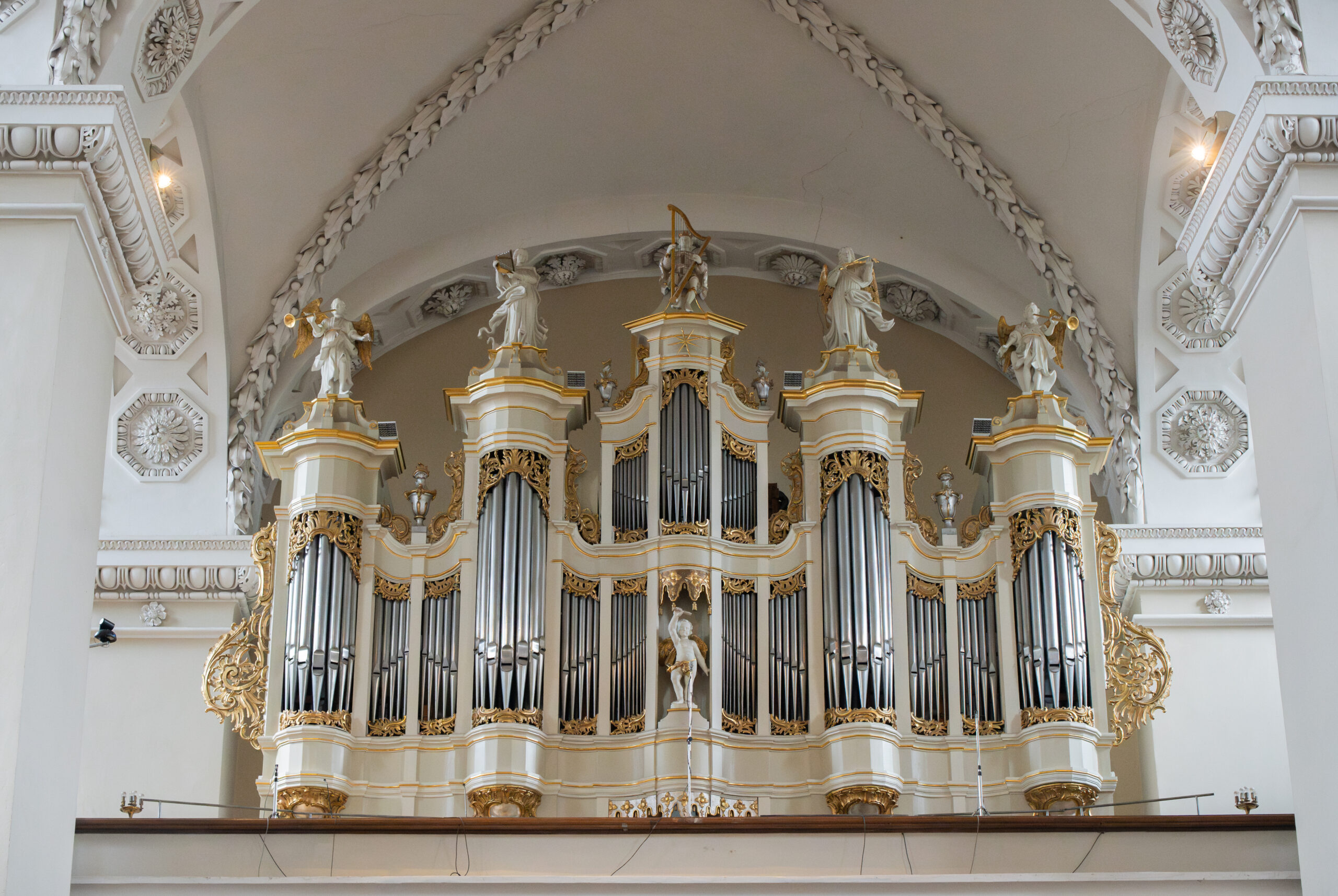
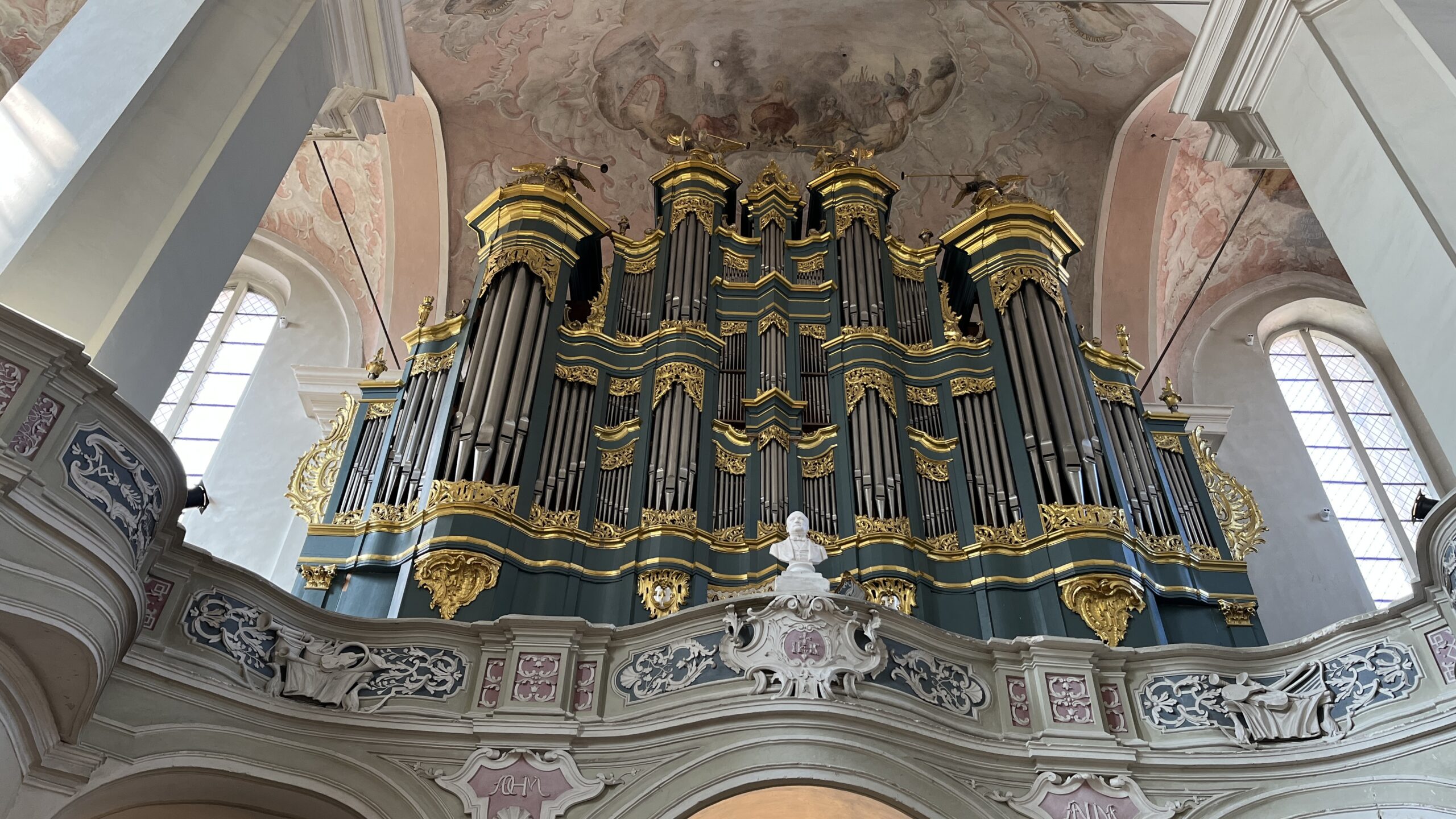
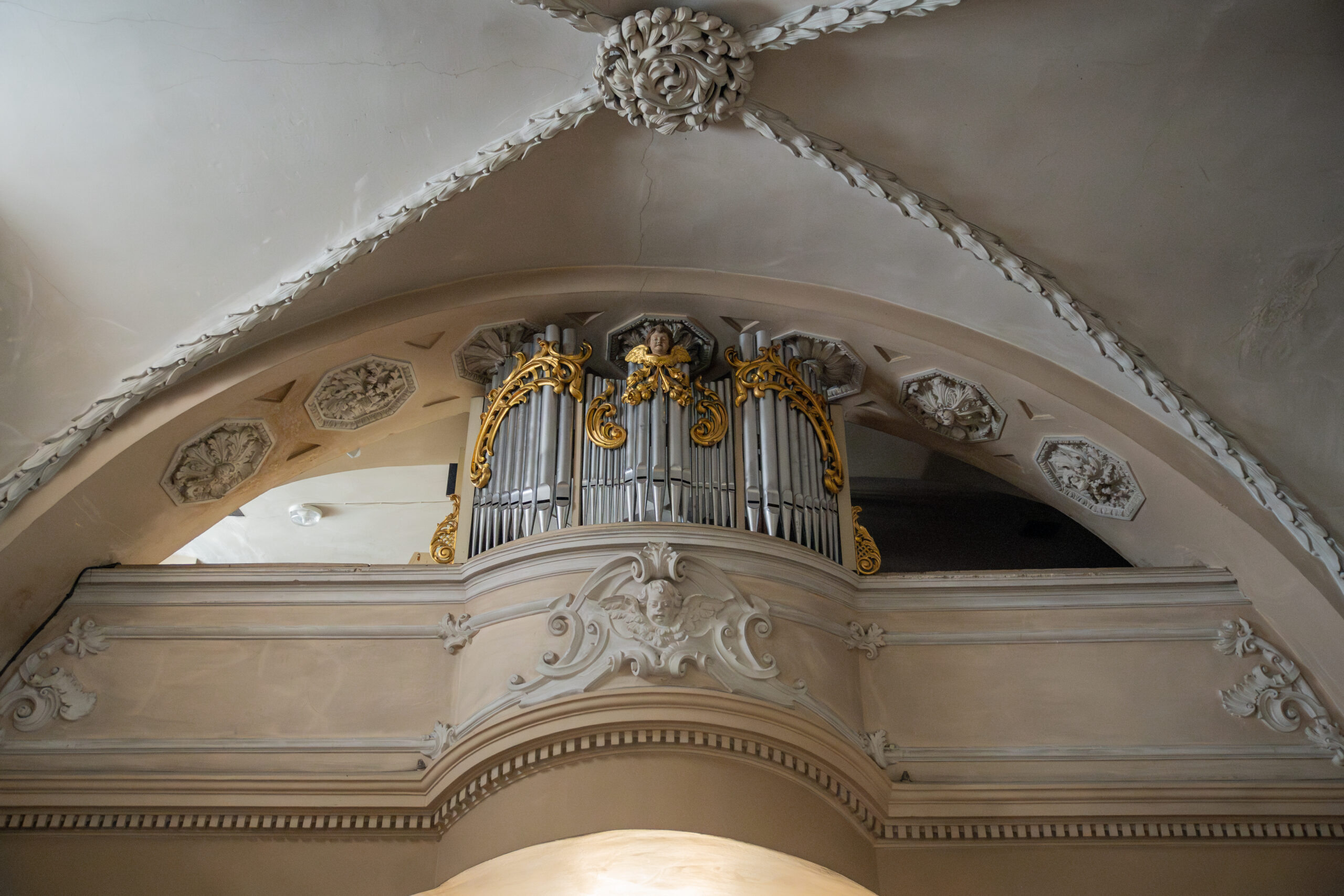
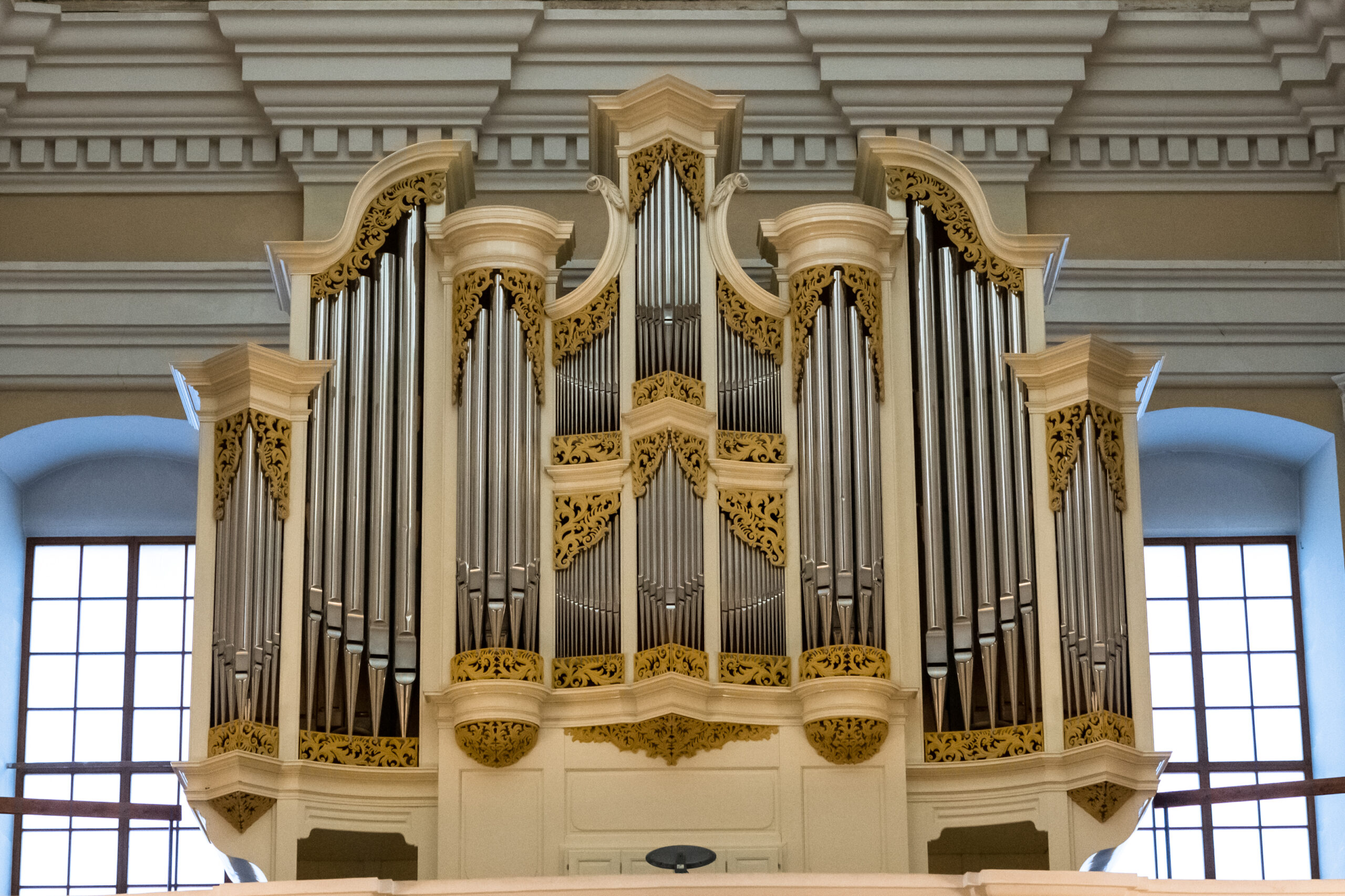
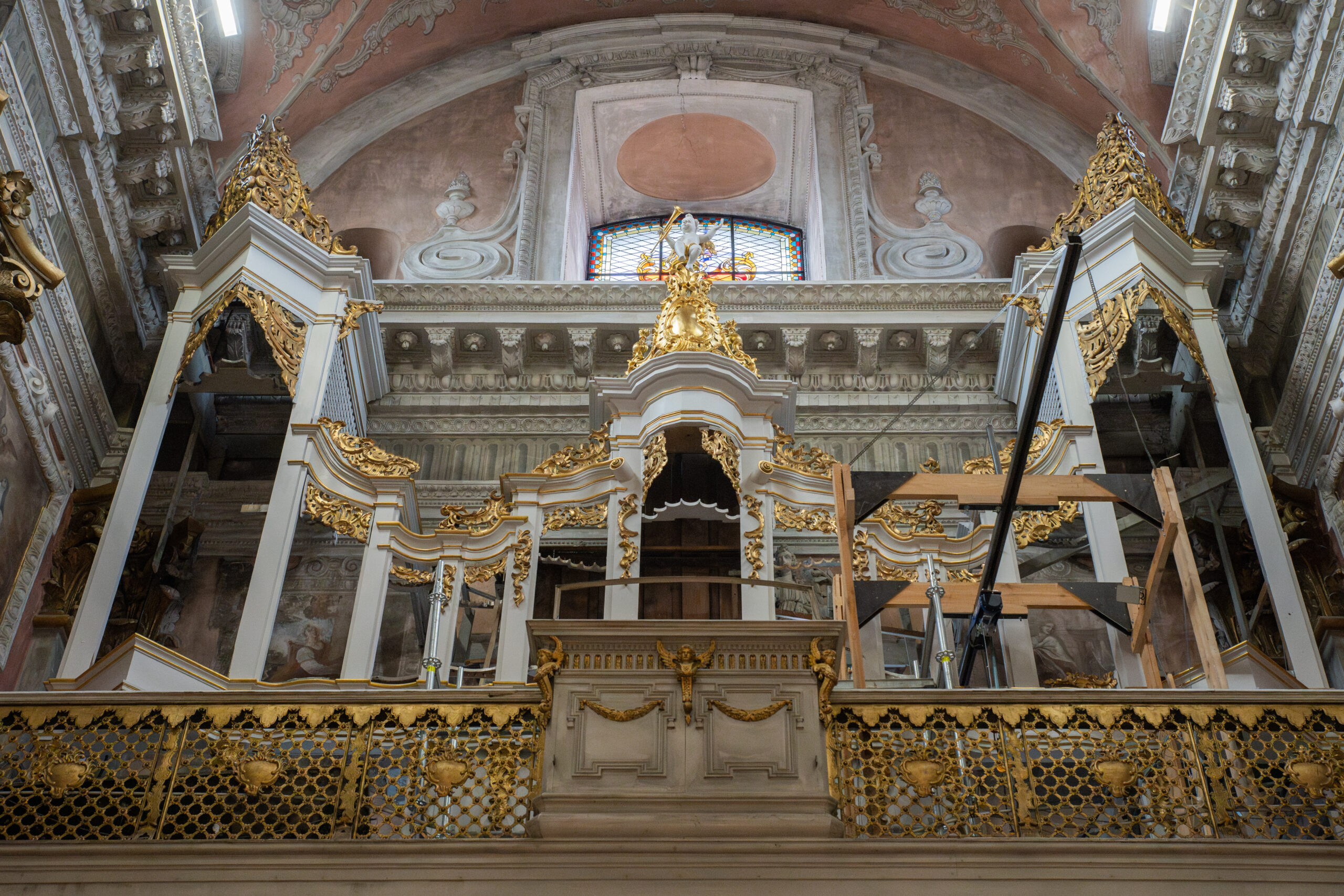
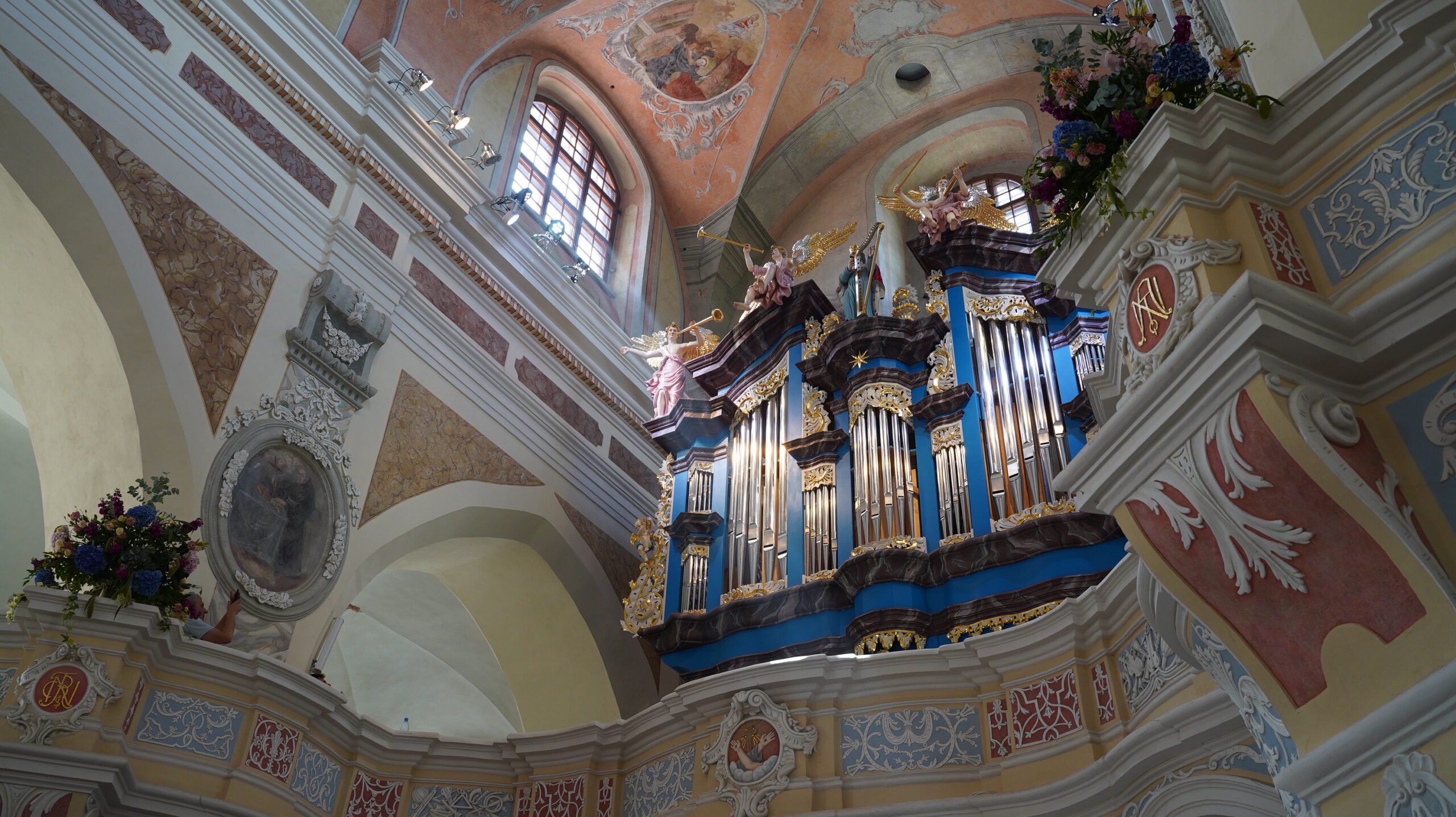
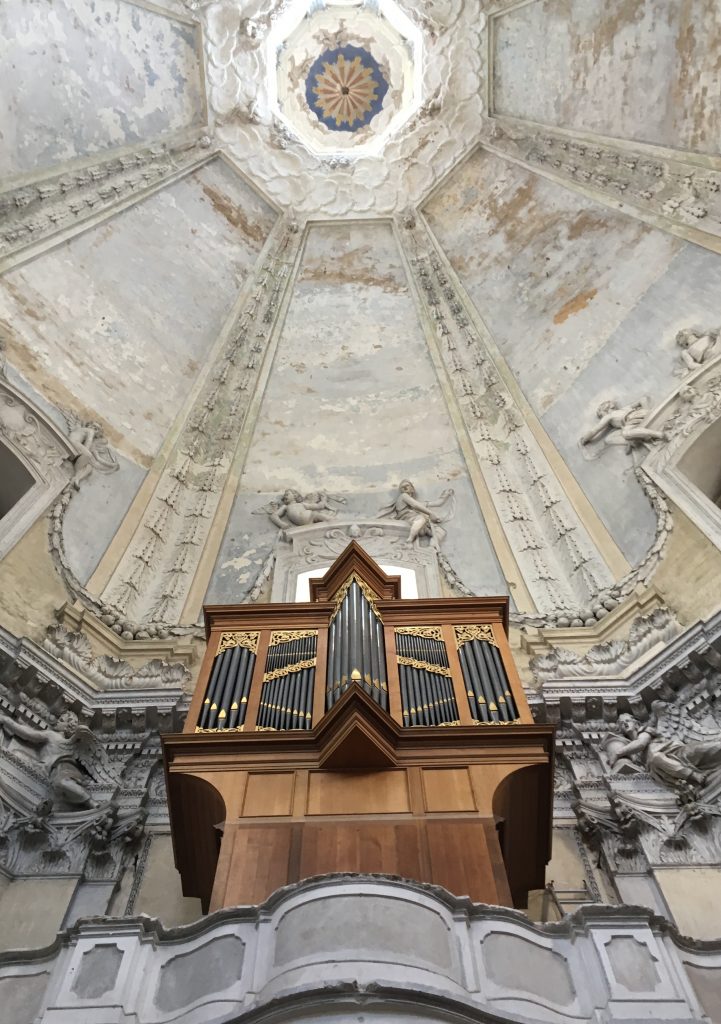
The golden age of the Vilnius organ is known as the Baroque period, especially in its late period (18th century). Most of the organs from this period, or rather their facades, have been preserved in the churches of the Old Town. In the 19th and 20th centuries, the modernisation of organs began, but it only involved replacing, extending, or rebuilding the instrument itself – the old facades were kept the same or, in some cases, enlarged. As a result, it is often possible to find a later instrument, for example, in the Romantic style, behind a Baroque facade.

The face of the Vilnius organ has not only been changed by modernisation but also by the occupation of the city. After the uprisings of 1831 and 1863, monasteries were closed en masse, and churches were turned into Orthodox churches. Some of the instruments were destroyed during that period, while others were moved to other churches. After the Second World War, only a few churches remained open in Vilnius. Others were looted and vandalised and turned into museums, warehouses or gyms. Their instruments were broken and taken away, recycled into stained-glass frames or lures for fish.

The face of the Vilnius organ has not only been changed by modernisation but also by the occupation of the city. After the uprisings of 1831 and 1863, monasteries were closed en masse, and churches were turned into Orthodox churches. Some of the instruments were destroyed during that period, while others were moved to other churches. After the Second World War, only a few churches remained open in Vilnius. Others were looted and vandalised and turned into museums, warehouses or gyms. Their instruments were broken and taken away, recycled into stained-glass frames or lures for fish.

With the restoration of independence and the return of churches to the faithful, some organs have been restored, but many are still waiting for better times. In most churches, the instruments are used only for the liturgy and are not capable of conveying a complex musical repertoire.


Point route

This is a free-form route with no fixed order of stops - explore in whatever way is most convenient for you!

Start location

The Cathedral Basilica

(Katedros a. 2)

Means of travel
On foot
Additional information

Routed by Rasa Pangonytė-Račiukaitė

Freedom to improvise!

This is a free-form route with no fixed order of stops - explore in whatever way is most convenient for you!

FOR LITURGY AND CONCERTS | The Cathedral Basilica

The present organ in Vilnius Cathedral dates back to 1859 when it was moved here from the closed…

FOR LITURGY AND CONCERTS | Vilnius University St Johns’ Church

The magnificent organ at Vilnius University in the Church of St John the Baptist and St John the…

FOR LITURGY AND CONCERTS | Church of the Holy Cross (Bonifraters)

The small, modestly shaped Church of the Holy Cross was known as a cultural space during the Soviet…

FOR LITURGY AND CONCERTS | Vilnius Evangelical Lutheran Church

According to historians, the organ in Vilnius Evangelical Lutheran Church was already in use at the…

FOR LITURGY AND CONCERTS | St Casimir’s Church

The organ at St Casimir’s is said to have the longest-lasting resonance: in an empty church, the…

FOR LITURGY AND CONCERTS | Chapel of the Gates of Dawn

Here, there is an organ that you can listen to on the street. Commonly referred to as being in the…

ORGANS NOT IN CHURCHES | Lithuanian National Philharmonic

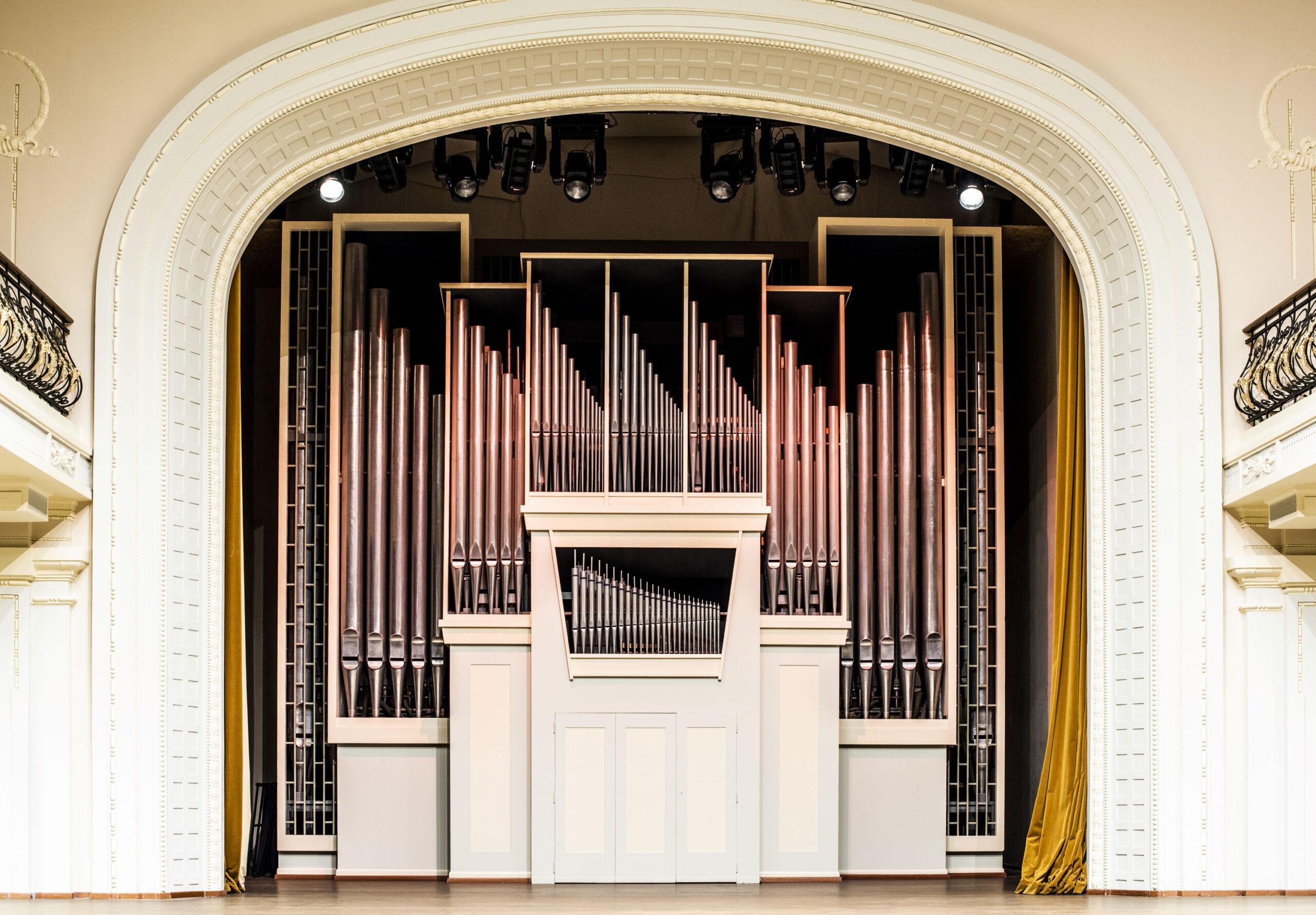
The history of the organ in the Great Hall of the Lithuanian National Philharmonic began after the…

ORGANS NOT IN CHURCHES | Lithuanian Academy of Music and Theatre

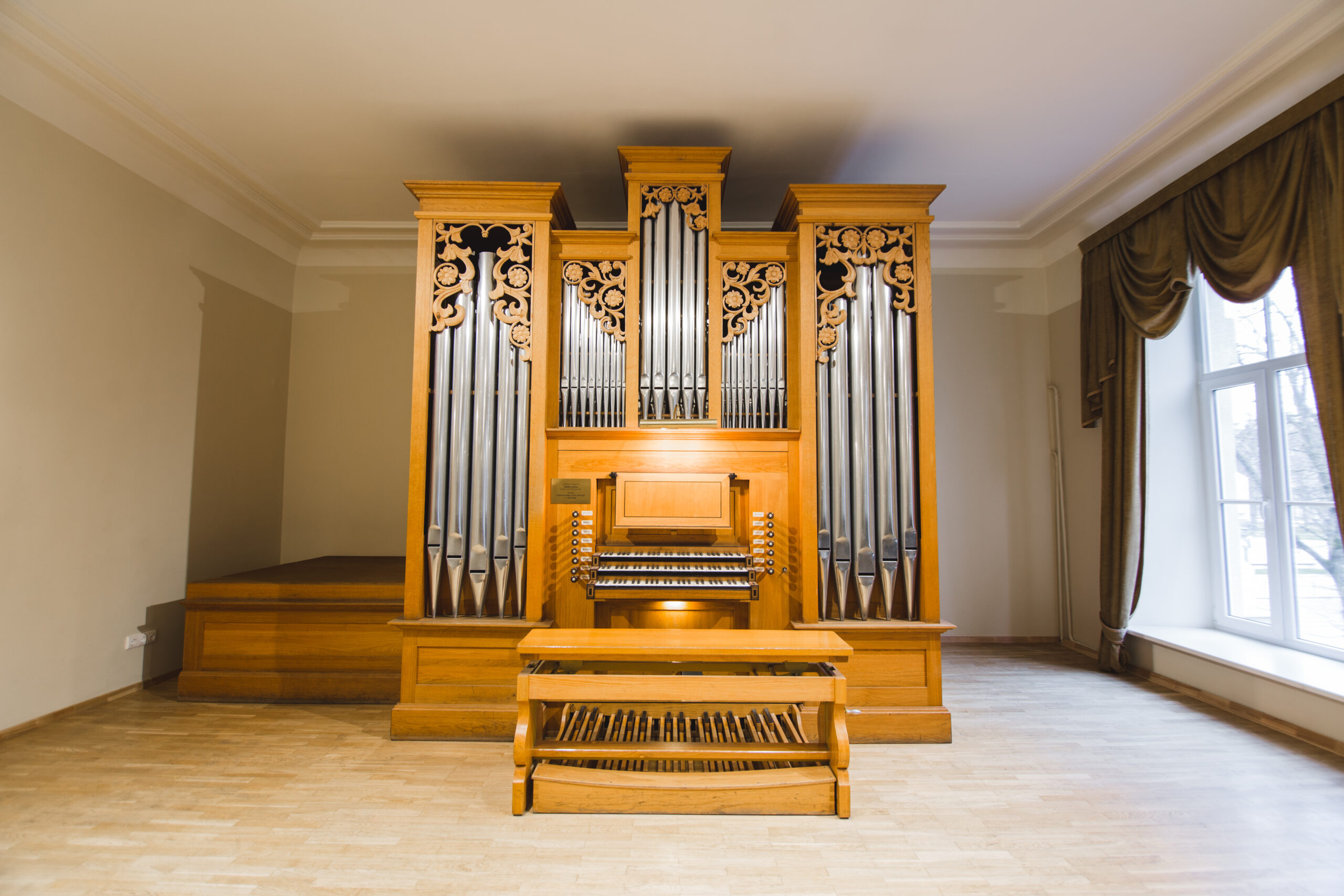
The Lithuanian Academy of Music and Theatre (LAMT) is the place where you will find the most organs…

ORGANS NOT IN CHURCHES | Palace of the Grand Dukes

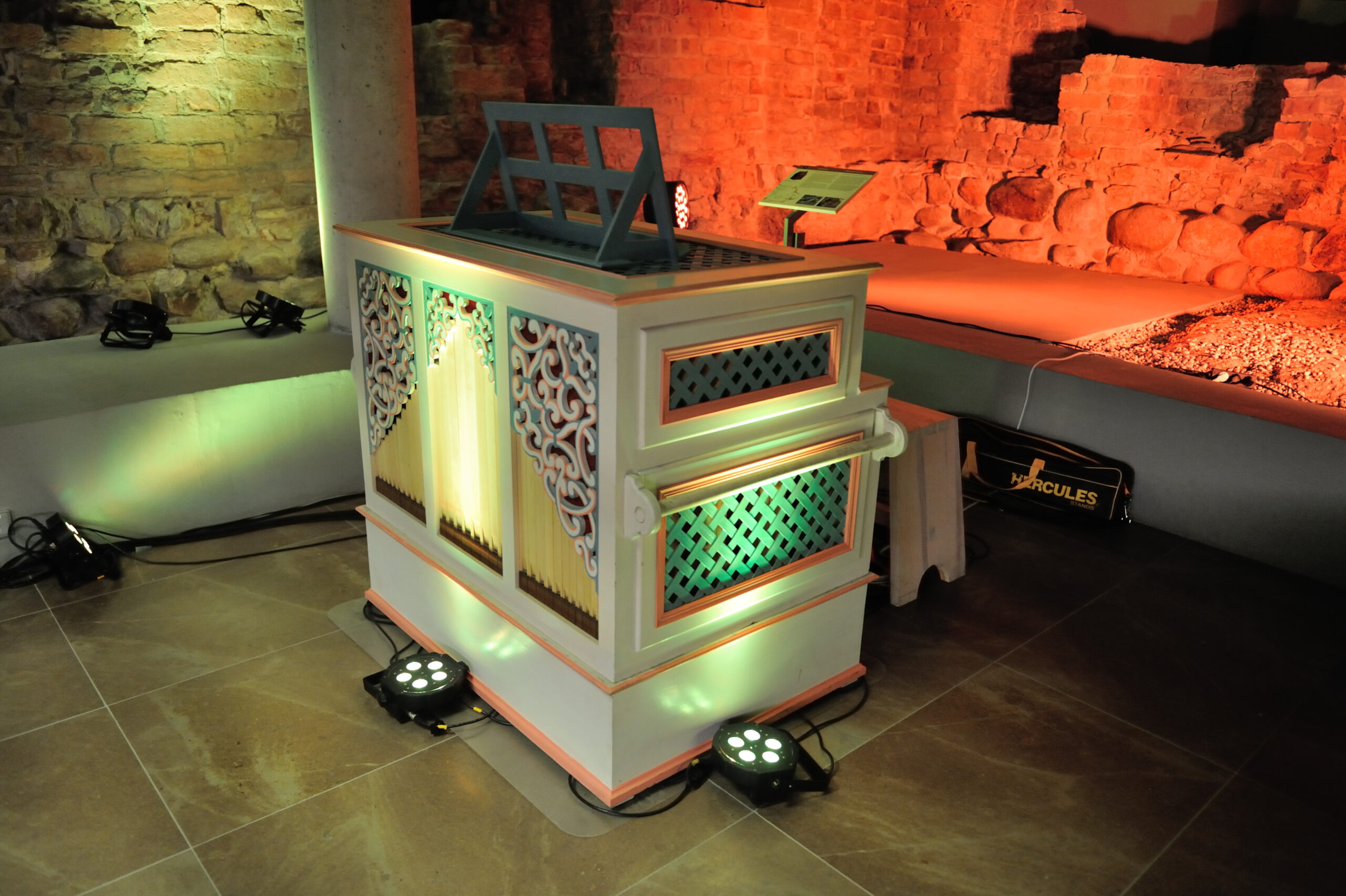
The organ in the Palace of the Grand Dukes of Lithuania is probably the smallest in Vilnius. The…

ORGANS NOT IN CHURCHES | VU Mažoji Aula – The Small Assembly Hall

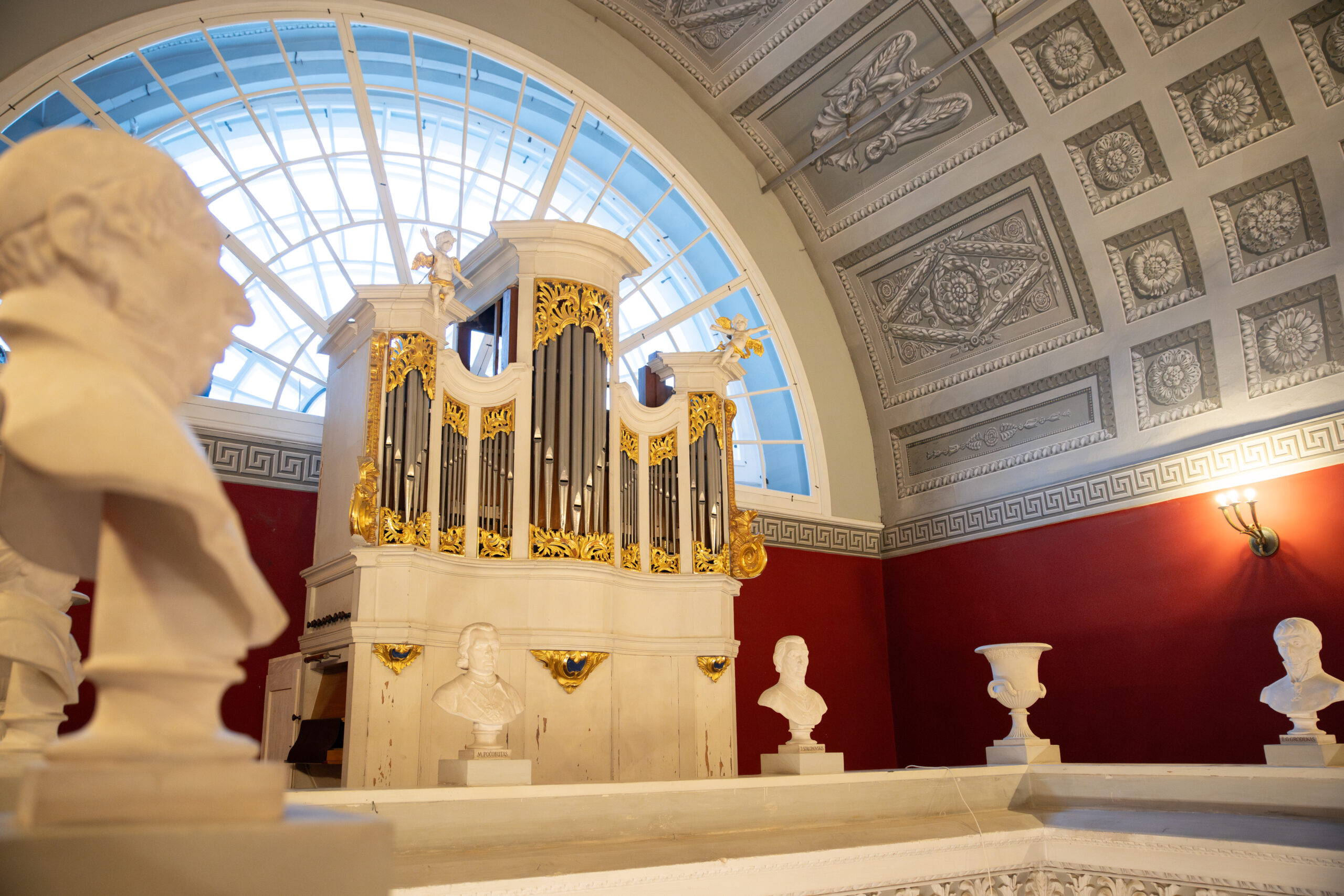
The Baroque-style organ in Vilnius University’s Small Assembly Hall is a true traveller.…

ORGANS NOT IN CHURCHES | Vilnius Town Hall

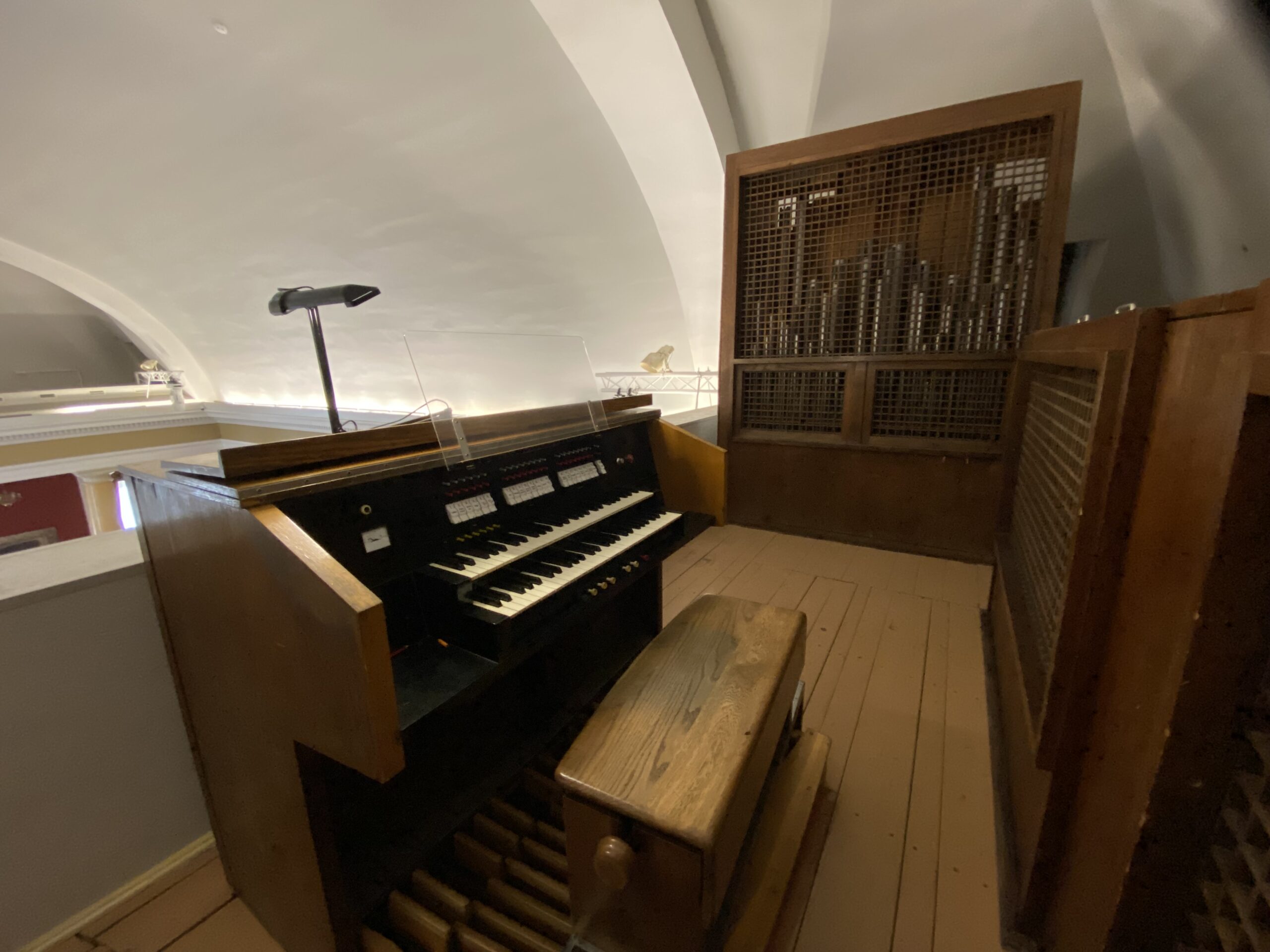
The organ loft of the Column Hall of the Town Hall does not boast an organ with a large ornate…

ORGANS NOT IN CHURCHES | Church Heritage Museum

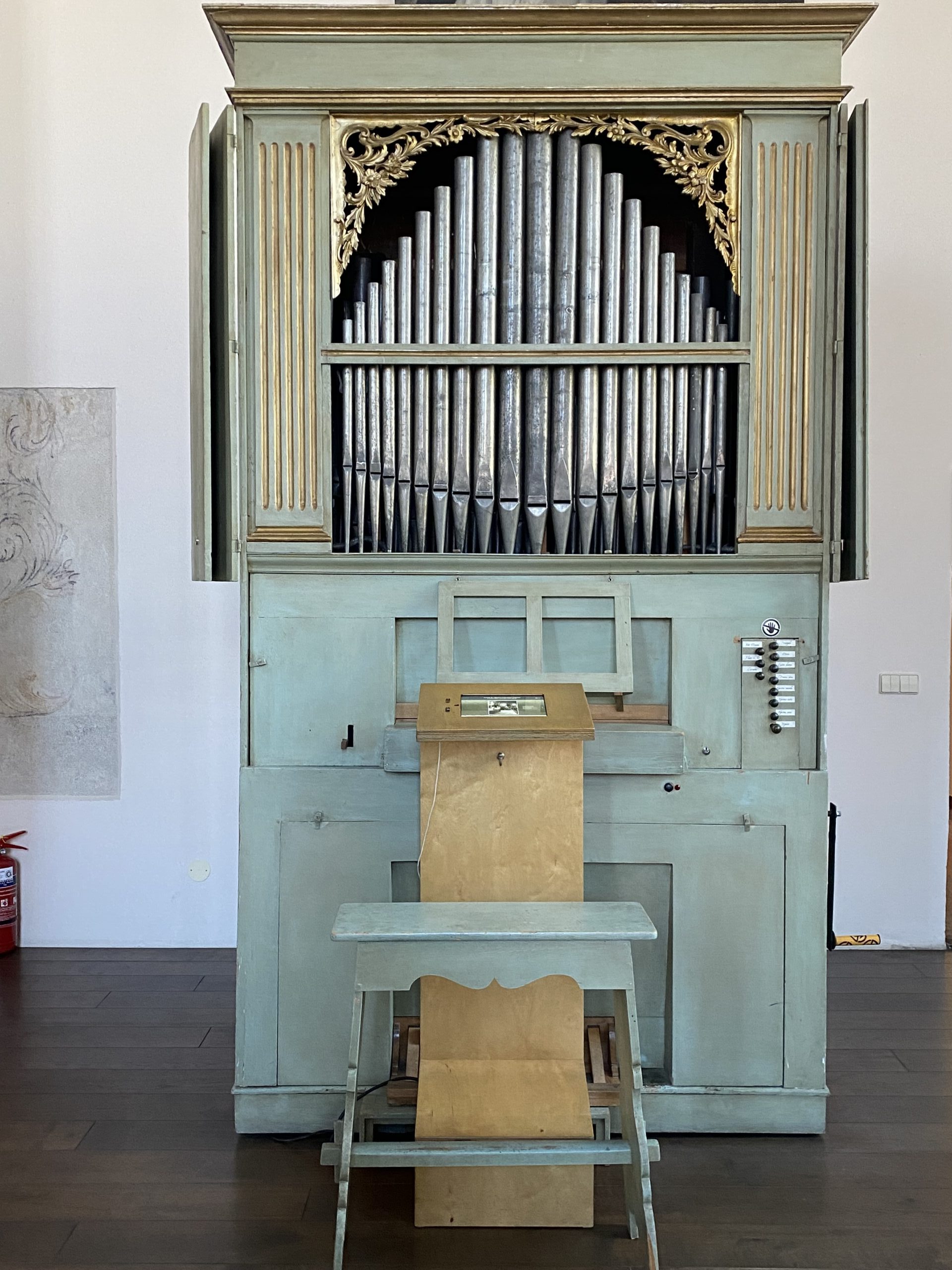
The organ in the Church Heritage Museum (formerly St Michael the Archangel Church) was dismantled…

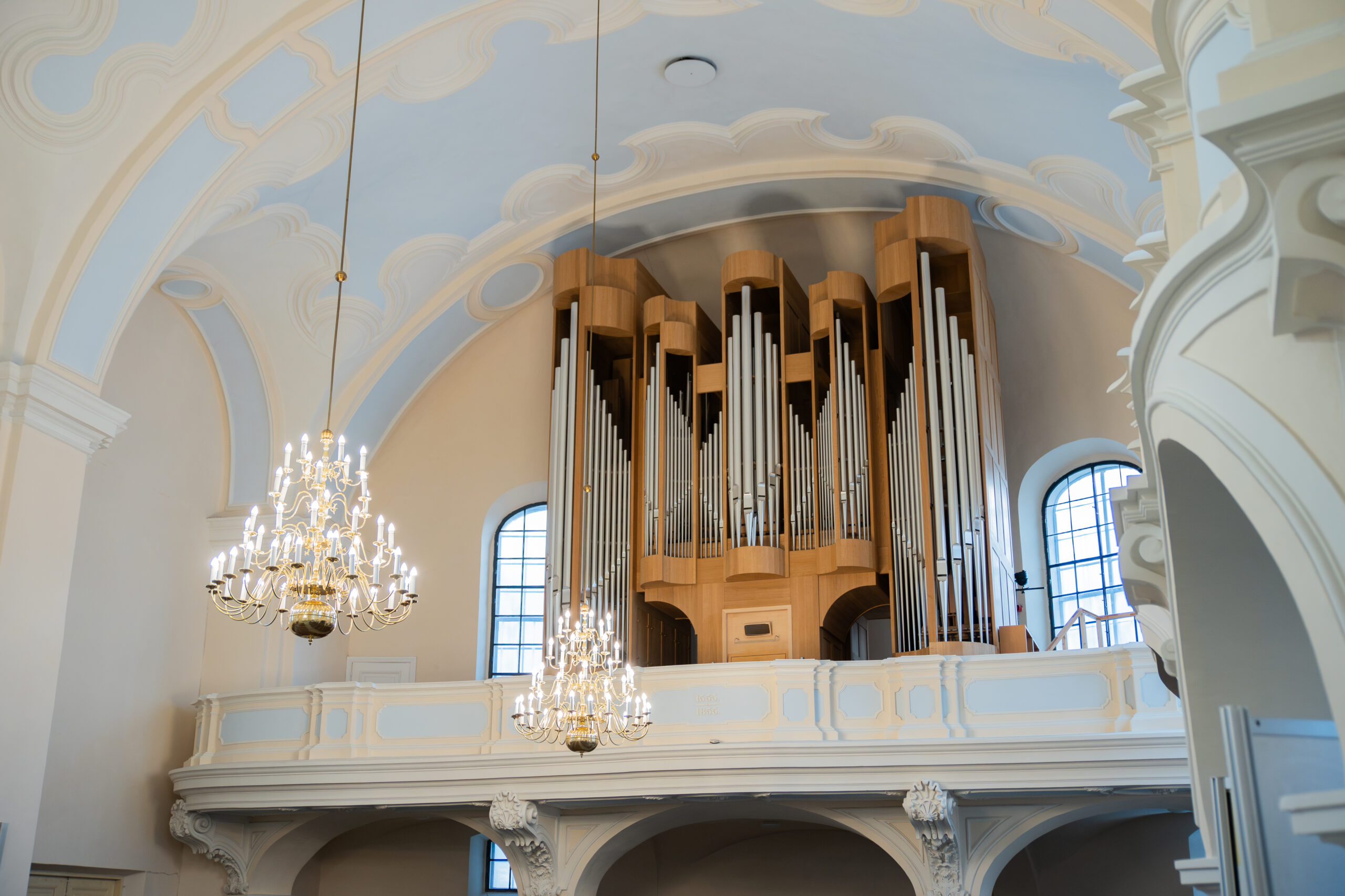
THE NEWEST ORGANS IN TOWN | The new organ of the Vilnius Church of the Assumption of the Blessed Virgin Mary (Franciscan)

Dating back to the 14th century, this church houses the city’s newest organ. Before Vilnius was…

THE NEWEST ORGANS IN TOWN | Vilnius Church of the Saviour (Joanites)

Built in the early 18th century at the initiative of Kazimierz Sapieha, the Hetman of the Grand…

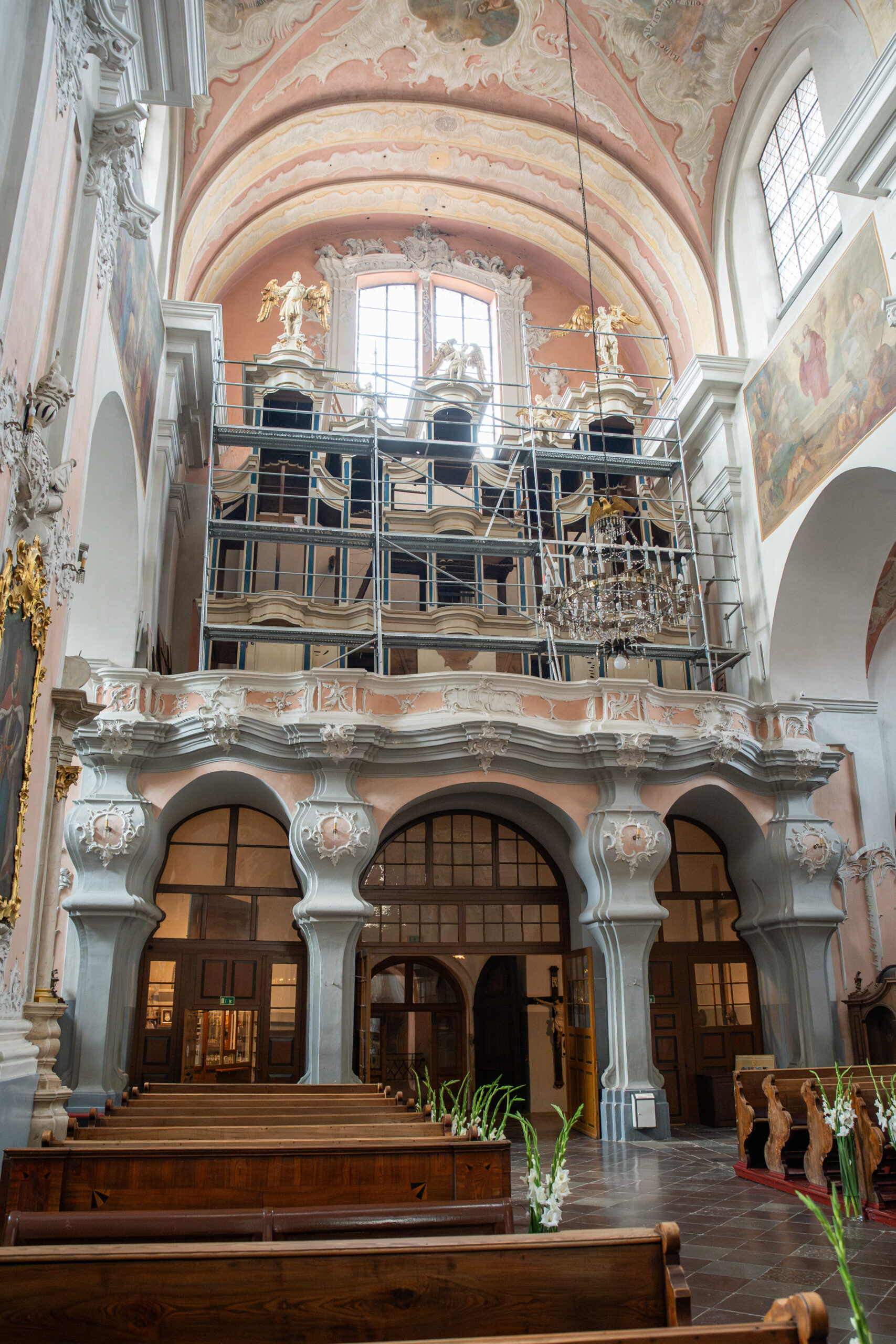
THE ORGAN REBORN | Church of the Holy Spirit (Dominicans)

The organ in Vilnius Church of the Holy Spirit (Dominican) is the largest Baroque instrument in…